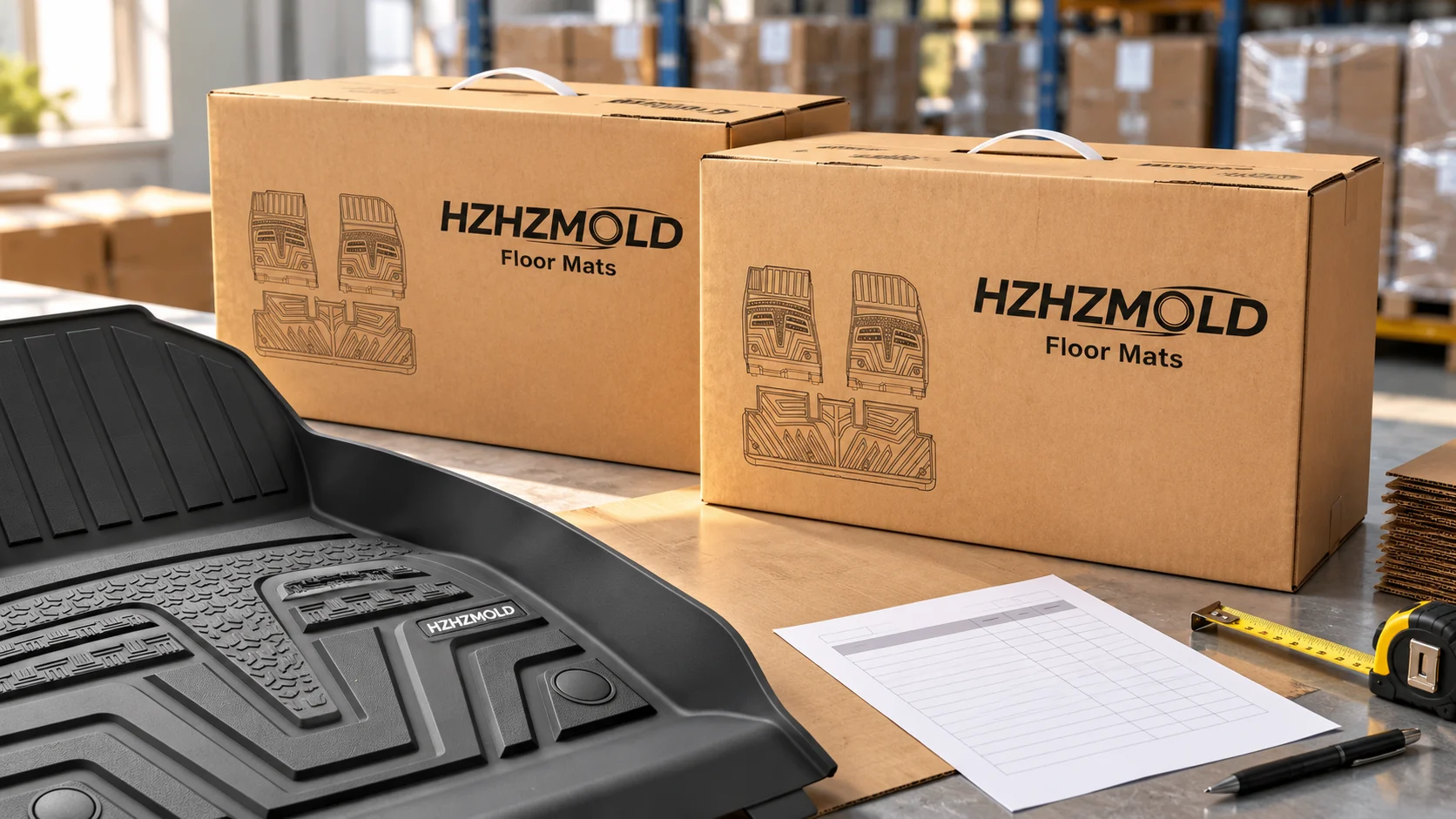
Packaging is part of the product experience and the receiving process. A clear packing plan helps buyers identify vehicle sets, check quantities and prepare for delivery into a warehouse or retail channel.
The details are easiest to settle while the product specification is still being reviewed.
Make every set identifiable
Agree on the model name, year range, market and set contents that should appear on each product label. If several fitments look similar, use a unique item code for each one. Confirm how driver-side, passenger-side, rear-row and cargo pieces will be identified inside the pack.
Send final artwork as an approved file and check a proof before printing. The label should match the product and purchase order, rather than relying on a photo or informal nickname.
Specify the outer carton
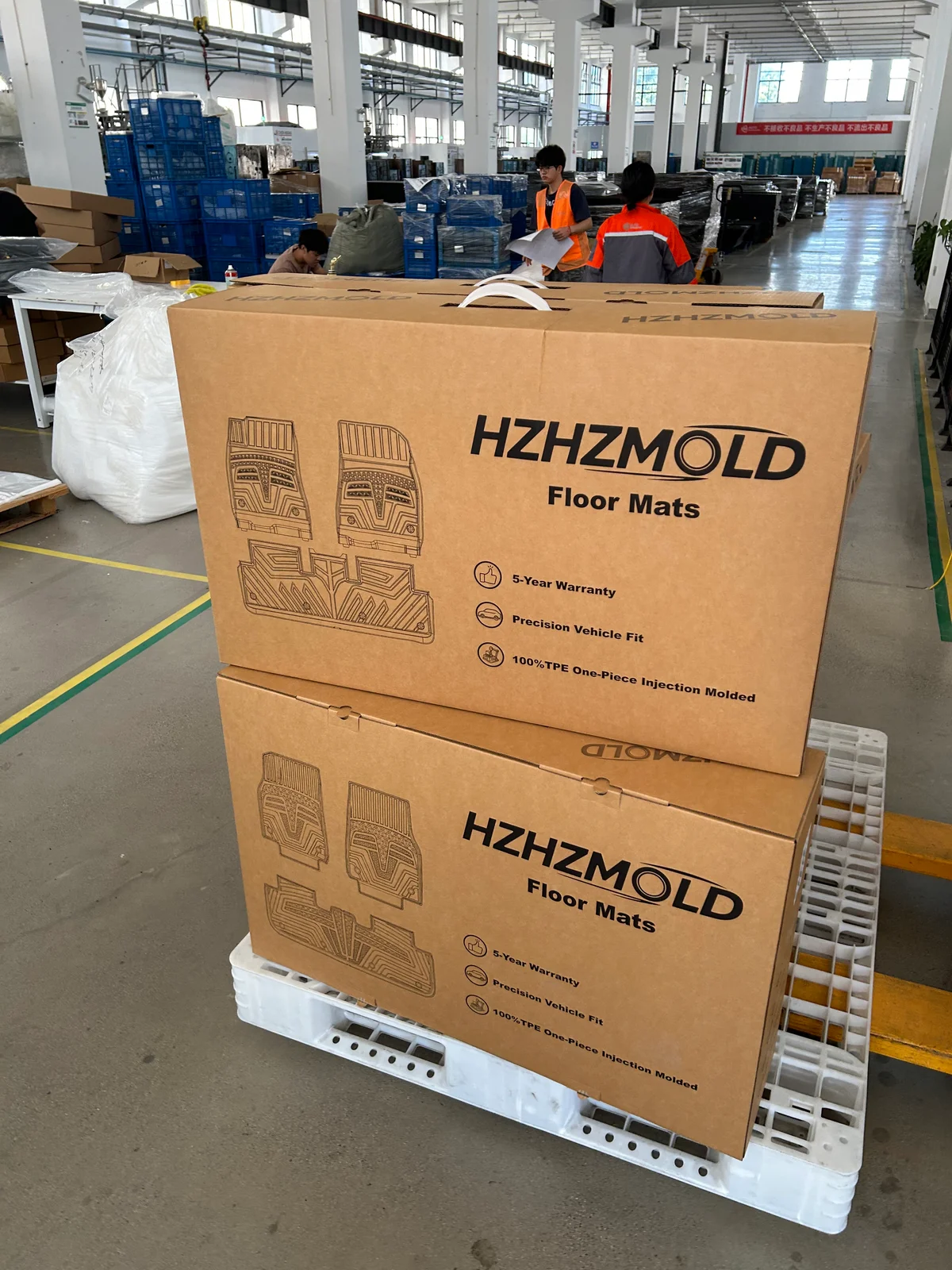
Confirm how many sets go into a carton, the carton dimensions, gross weight and any handling marks your receiving team needs. Discuss the packing method with the supplier if mats are nested, folded or otherwise arranged for transport, and inspect the resulting sample pack.
For mixed-model orders, ask for a packing list that shows the quantity of each item code by carton. This makes warehouse counting and exception handling much simpler.
Connect packing to shipment planning
Share the destination, delivery terms and any retailer or warehouse labeling rules early. Confirm the final packing list, carton count and shipping documents before dispatch. Requirements differ by market and channel, so ask your freight and customs partners to review what applies to your shipment.
When the product, label and packing list all use the same item codes, everyone has a clearer reference from purchase order to receipt.