Introduction
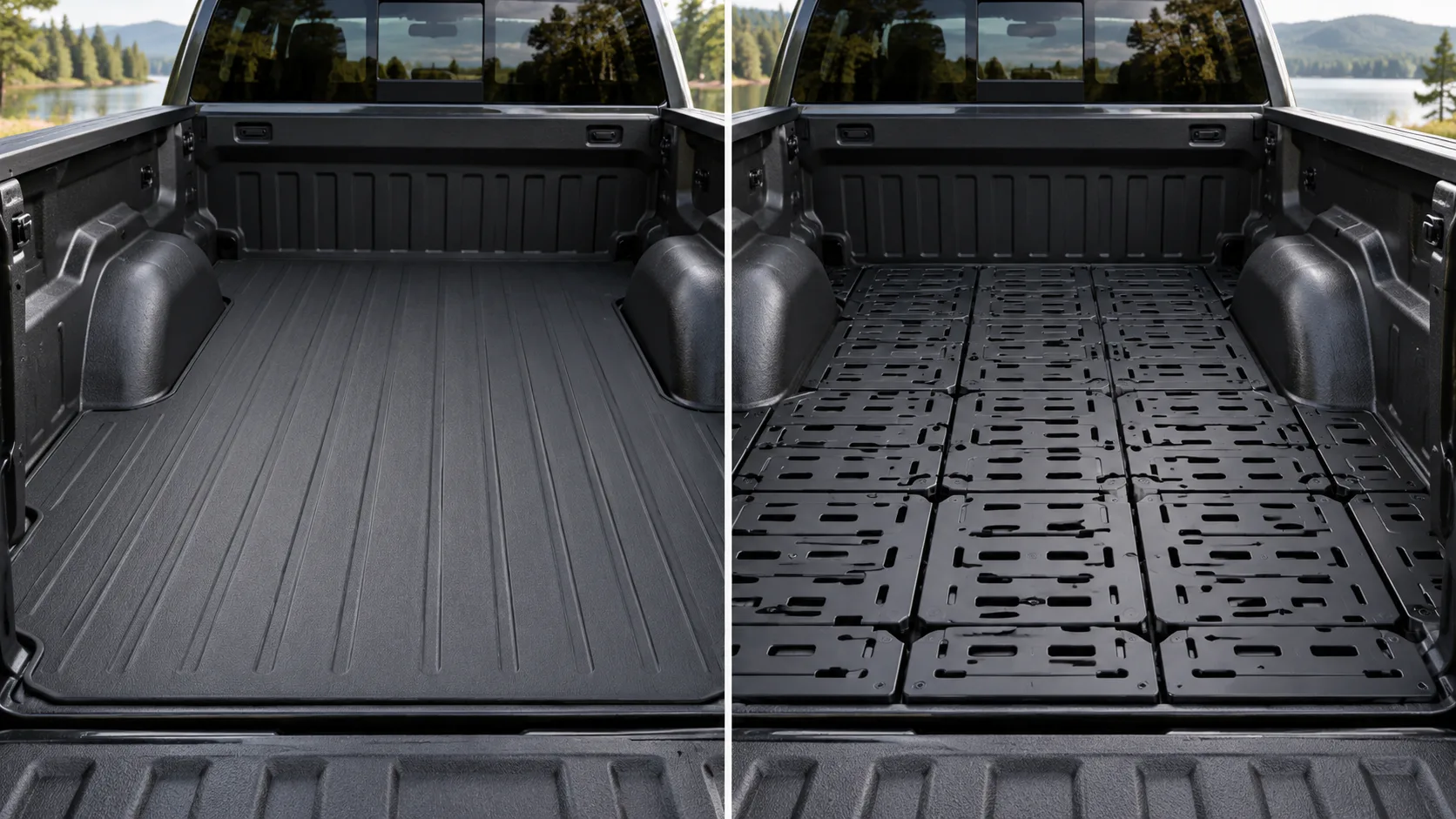
Pickup owners use their beds for very different loads: tool cases on weekdays, camping gear on weekends, garden supplies in spring, or sports equipment all year. For an importer or accessory distributor, this variety raises a practical product decision. Should the catalog offer a simple one-piece bed mat, a modular panel system with repositionable cargo accessories, a drop-in liner, or a spray-on coating?
These products do not perform the same job. A one-piece mat mainly covers the bed floor. A modular system adds a configurable base and, depending on the kit, accessories that help organize particular items. A drop-in liner or coating can cover more of the bed structure, but may not provide the same removable cargo layout. The right choice depends on the truck, load, access pattern, installation constraints, and what the customer expects to be included.
This guide focuses on modular systems versus one-piece mats while explaining where full liners and coatings fit. It provides a fitment and sample-review plan for wholesale buyers. Any statement about a particular HZHZMOLD kit should be checked against its current bill of materials, vehicle list, installation instructions, and physical sample.
Quick answer: Choose a one-piece bed mat when straightforward floor coverage and simple removal are the priority. Consider a modular panel system when users need a configurable layout for changing cargo and the specific kit fits the truck bed and accessories. Neither replaces proper cargo tie-downs or a product-specific installation check. Compare the supplied parts, bed compatibility, cleaning, removal, and total cost before ordering.
Understand the four common bed-protection approaches
One-piece removable bed mat
A one-piece mat is generally a single sheet or shaped piece that sits on the bed floor. Its advantages may include a simple SKU, fast installation, and easier removal for cleaning, depending on the design. It usually does not protect every side wall or the tailgate. Check its dimensions against the bed, wheel-well shape, tie-down access, surface texture, retention method, and behavior with a bed cover or existing liner.
A flat or rolled mat can also present packing and recovery questions. Ask how it is shipped, how long it should rest before installation, and whether corners lift after unpacking. A thick mat is not automatically a stable mat. Vehicle fit, underside design, and installation matter.
Modular panel system
A modular system uses connected panels to form a base. The supplied product concept on this site shows a stationary “Standard Fix” layout and a “Standard Slide” layout intended to move toward the tailgate, along with angle, straight, and adjustable cargo blockers. These are configuration descriptions from supplied product materials; the exact parts, installation and vehicle compatibility must be confirmed in the quote.
Its purchase case is flexibility. A user may position accessories around a tool box one day and around another load the next. A slide-out design could improve reach to cargo near the front of a deep bed, but the user must understand the permitted load, movement, locking and installation instructions for the actual SKU. Do not infer a load rating from photos or from the word “modular.”
The trade-off is complexity. More components mean more SKU and packing checks, more installation steps, possible lost parts, and more fitment details. A modular system needs a complete parts list and clear instruction set before it is ready for a retail or fleet channel.
The site's modular truck bed mat overview illustrates the proposed configurations. Confirm the exact catalog and vehicle compatibility with the supplier before treating the illustrations as a purchase specification.
Drop-in bed liner
A drop-in liner is usually a formed insert covering the floor and at least some bed walls. It can be useful when broader bed-surface coverage is wanted, but its fit, drainage, tie-down access, and compatibility with covers or other accessories require model-specific review. Some vehicle options are incompatible with one another. For example, Ford's 2026 Maverick order guide lists restrictions among certain bed accessories. That example does not define compatibility for other trucks; it illustrates why the vehicle's actual accessory configuration must be checked.
Spray-on coating
A professionally applied coating covers exposed surfaces rather than arriving as a removable mat. It may suit buyers who want a permanent bed finish, but it does not by itself create a configurable cargo organization system. Surface preparation, installer quality, coverage, and repair method are central to that purchase. A modular mat and a coating might coexist in some vehicles, but the combination should be physically checked for clearance and attachment.
Compare the options by the job to be done
| Buying criterion | One-piece mat | Modular panel system | Drop-in liner | Spray-on coating |
|---|---|---|---|---|
| Main role | Removable floor coverage | Configurable floor layout, depending on accessories | Shaped floor and wall coverage | Permanent surface coating |
| Cargo organization | Usually separate accessories needed | May include repositionable blockers | Usually separate accessories needed | Separate accessories needed |
| Removal for cleaning | Often simple, product dependent | Panels and accessories require a defined removal process | Larger formed insert; removal varies | Not removable |
| Parts control | Usually one primary piece | Multiple panels, connectors, blockers, and possibly slide components | One large insert plus fasteners where applicable | Applied material, no removable kit |
| Fitment risk | Bed size and wheel wells | Bed size, panel count, anchor points, moving parts, accessories | Bed contour and accessory clearance | Preparation and coverage of actual bed |
| Quote comparison | Unit, pack, material, dimensions | Complete bill of materials, configuration, installation, spares | Vehicle-specific insert and freight volume | Installation service and materials |
The table compares typical product roles, not product ratings. A detailed specification may change the answer. For instance, a one-piece mat can include molded contours, while a modular kit may have fewer components than a buyer expects. Request the actual drawing and parts list rather than buying from a category name.
Match the cargo pattern to the layout
Start with three or four representative loads. For a work truck, photograph the tool cases, consumables, and equipment normally carried. For an outdoor customer, include coolers, boxes, and camping gear. Record approximate footprint and mass, how often the layout changes, whether the tailgate must support loading, and whether the truck travels on rough roads. Note any existing tonneau cover, bed rack, drawer, divider, or factory tie-down system.
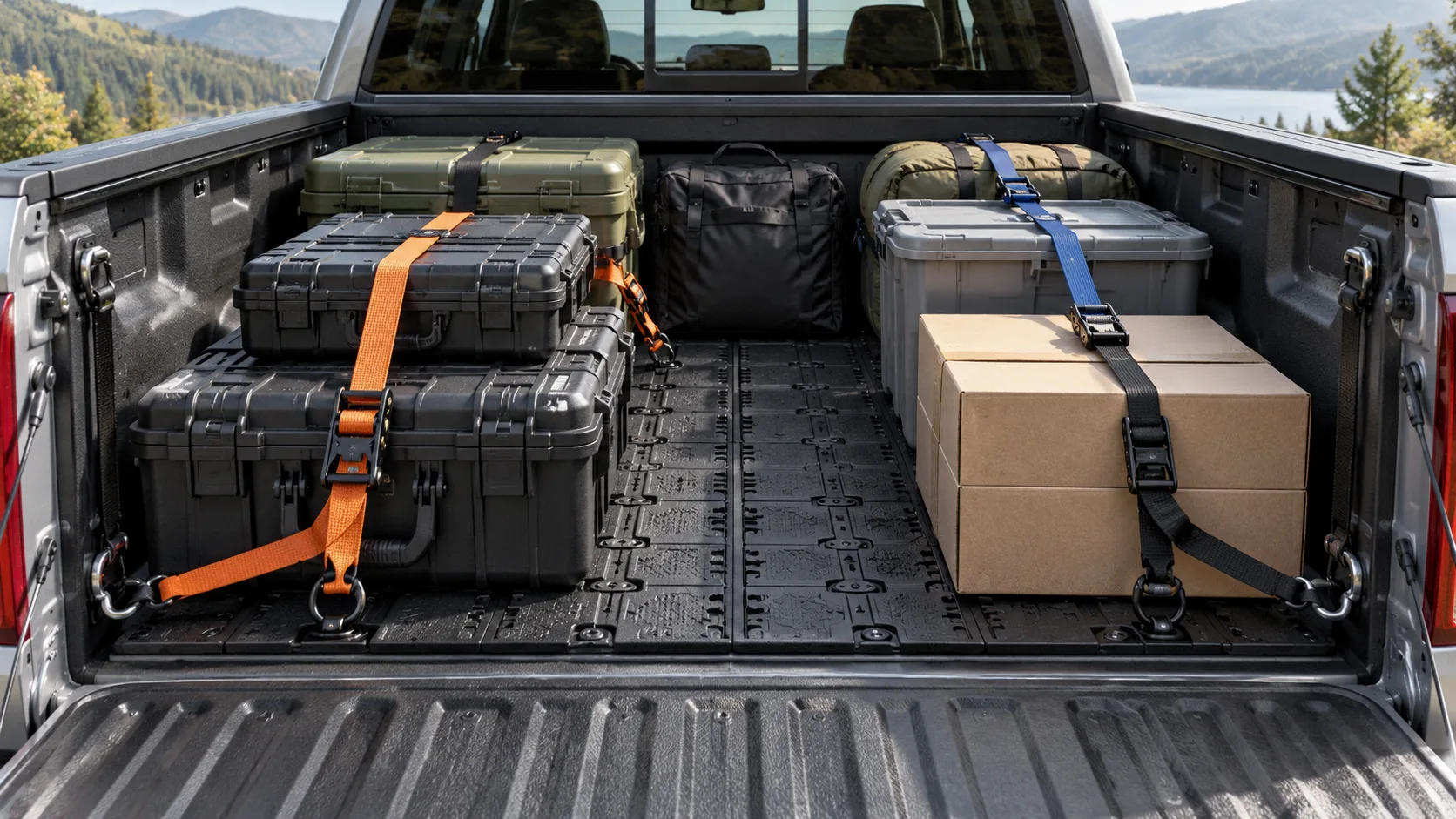
Then ask what problem the mat should solve. Is it protecting the floor from abrasion? Keeping small cases in a repeatable position? Making boxes easier to reach? Helping users remove dirt after a trip? A cargo blocker may make a layout tidier, but it is not automatically a safety-rated restraint. Use the vehicle's approved tie-down points and follow its cargo-securing instructions. Do not advertise a blocker as a replacement for straps, nets, or other restraints unless a relevant rating and use case are documented.
For a changeable load, test more than the best-looking catalog arrangement. Place the actual common items in the bed, try the proposed blocker positions, close the tailgate, and verify the layout under the vehicle manufacturer's load and securing guidance. If the kit includes a sliding section, inspect its movement and locking behavior with the permitted load as stated in its instructions. Never invent a capacity from appearance.
Measure the bed before discussing a vehicle-specific quote
“Fits an F-150” or “fits a pickup” is not enough. Confirm make, model, model year, region, bed length, inner width, wheel-well spacing, bed-floor contour, tailgate interface, and any liner or accessory already installed. Ask whether measurement should be taken at the bed floor, above the wheel wells, or both. A retailer may list nominal bed length, but actual usable dimensions and attachments can differ.
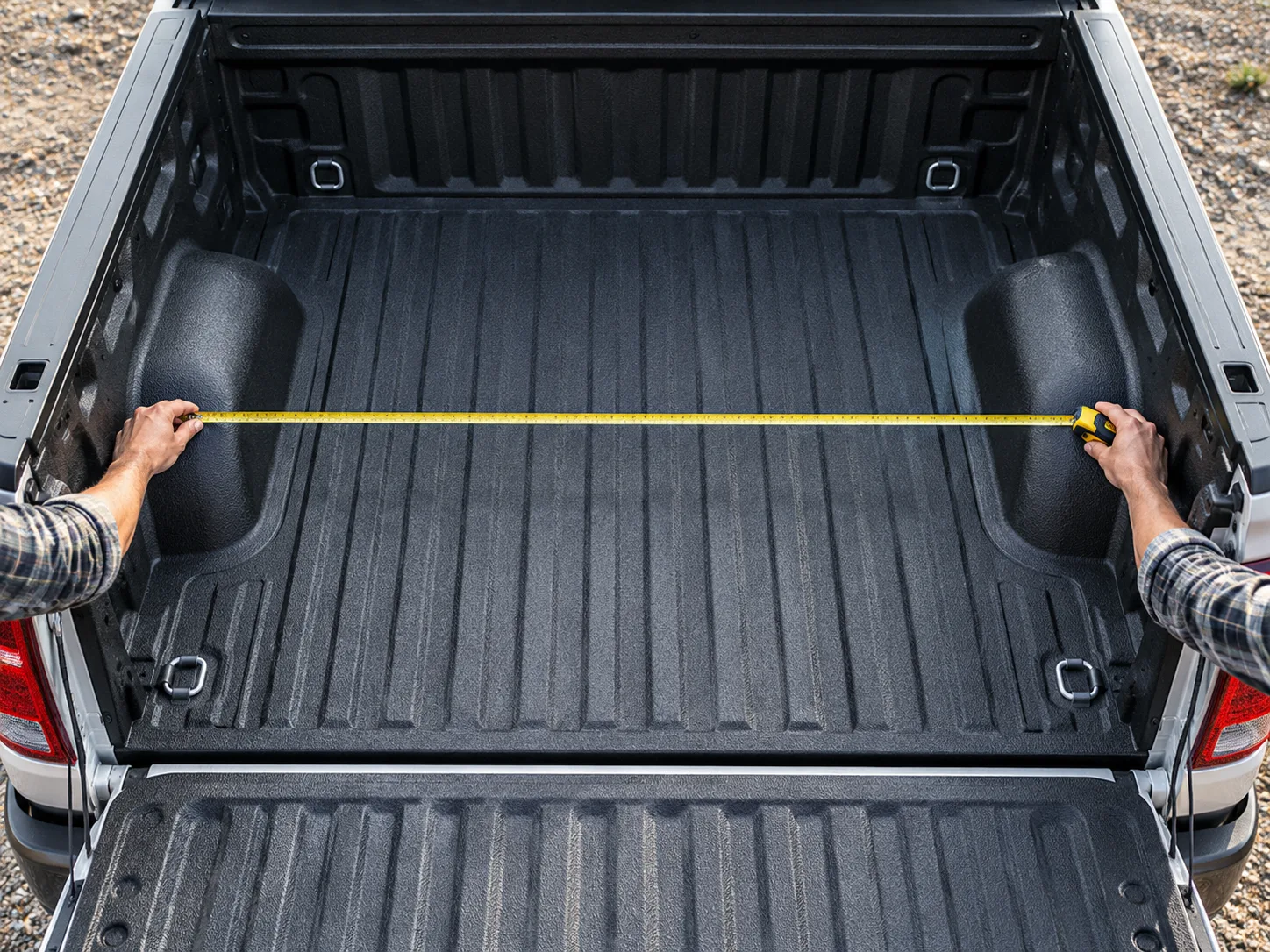
For modular panels, ask how many panels make the intended layout, whether a partial row or trim piece is used, and how the system is retained. Confirm access to drain openings, tie-down points, electrical outlets, and any bed-floor hardware. For a sliding configuration, ask about the tailgate clearance, track or base attachment, stop positions, and whether the user can remove the system without modifying the truck. Record any drilling or adhesive steps explicitly.
If the supplier offers a model-specific kit, request a compatibility list by exact variant and a current installation guide. If the offer is configurable rather than model-specific, define the approved layout dimensions and any excluded vehicles. Use a sample in the target truck before a large purchase, especially where bed accessories are already installed.
Inspect the installation, not just the finished photograph
A useful sample review begins with the carton. Count panels, connectors, blockers, fasteners, instructions, and any tools against the bill of materials. Look for left/right or front/rear orientation marks where needed. Check that the packaging protects edges and moving parts through shipment and that small accessories are packed so they cannot disappear into a large carton.
In the vehicle, clean the bed and follow the supplied instructions. Do not improvise attachments. Record the time and tools required, whether one person can perform the work, and which steps cause confusion. Check panel connections, perimeter clearance, tailgate closing, access to tie-downs and drains, and interaction with covers or racks. If the panels have drainage openings, inspect the installed path for water and debris rather than assuming every bed configuration drains equally.
Use a repeatable test script for a second installer who has not seen the product before. Misread instructions are a product problem as well as a user problem. Record steps that require force, hidden alignment, or disassembly to correct. A clear installation video can help, but it should show the same kit revision sold in the box and should not omit safety-relevant steps.
Ask for Product Catalog: Planning a pickup accessory line? Send the truck models, bed dimensions, target cargo types, expected quantity, and preferred layout to HZHZMOLD. Request the current modular kit catalog, component list, installation information, and fitment confirmation for the variants you plan to sell.
Evaluate cargo access and everyday maintenance
A mat is used long after the initial installation. Try loading from the tailgate, reaching toward the front of the bed, and removing equipment after a wet or dusty trip. If a slide-out layout is proposed, ask how it behaves when the bed is uneven or when dirt enters the mechanism. Confirm the allowed loading and cleaning procedures with the supplier's actual manual.
For cleaning, look at the gaps between panels, the underside, and the bed surface below. A drainage opening can let water pass, but debris may collect in places the user cannot see. A one-piece mat may be easy to lift but awkward to handle in a narrow garage; a panel system can be removed in sections but takes more steps. Run the same cleaning task with the two samples so the comparison reflects your customer environment.
Ask about replacement parts. Can a damaged panel or blocker be ordered separately? Are connectors compatible across kit revisions? Does the packaging include a spare fastener? A modular catalog becomes difficult to support if every missing part requires replacing the entire kit. Record part numbers and service terms in the buyer file, not just in an email thread.
Build a meaningful wholesale comparison
Compare like with like. A low quote for base panels may exclude blockers, slide hardware, fasteners, instructions, branded cartons, and spares. Request a complete bill of materials for each configuration, plus finished dimensions, packed size, gross weight, minimum quantity, sample cost, production lead-time estimate, and delivery term. Freight can materially affect a bulky bed accessory, so use the actual carton data for landed-cost modeling.
If a supplier offers Standard Fix and Standard Slide, request a side-by-side parts list and a statement of the extra installation and maintenance steps for the slide version. Ask whether both use the same base panels and whether a customer can upgrade later. Do not assume interchangeability because the products share imagery or a family name.
Wholesale buyers should also decide how fitment is represented online. Publish the specific make, model, year, bed length, market and exclusions that have been verified. State clearly when the product is a configurable kit requiring a dimension check. A “fits all pickups” headline may attract clicks but can produce costly returns and loss of trust.
Shipment and receiving checks for multi-part kits
Before dispatch, inspect not only the visible panels but also the small components. Count each accessory type, confirm finish and orientation, and check the printed part numbers. Photograph the complete kit laid out beside the approved bill of materials. Check the carton label against the exact truck variant and configuration. Where cartons contain several kits, make sure the inner kits remain identifiable after the outer carton is opened.
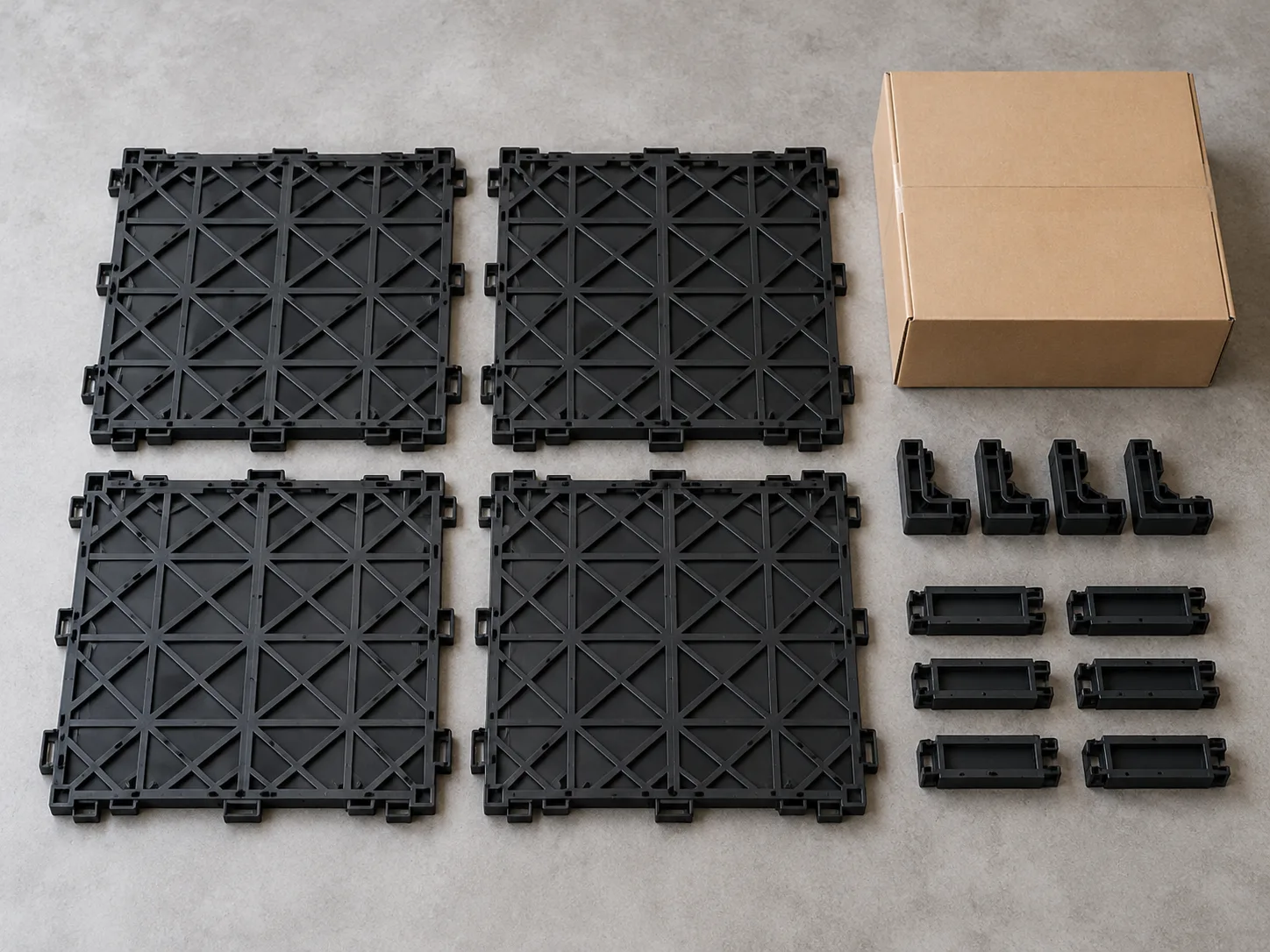
A receiving team should be able to compare the packing list with physical cartons without guessing. For mixed truck-model orders, use unique SKUs and labels that distinguish bed lengths and Fix versus Slide configurations. Agree on a shortage and damage reporting process before shipment. A missing connector in one box can make an otherwise sound kit unsaleable.
If the buyer requires a preshipment inspection, define a sample plan that includes component count, assembly check, dimensional check, functional review for moving parts where relevant, packaging integrity, and label scan. The accepted sample and current installation guide should be on hand for the inspector. This is a proposed inspection framework, not a claim that a particular shipment has already passed it.
FAQ
Is a modular truck bed mat the same as a bed liner?
No. A modular mat typically creates a configurable bed-floor system; a formed liner or coating may cover more of the bed's sides and surfaces. Compare the exact coverage and components of the products under consideration.
Can cargo blockers replace tie-down straps?
Do not assume so. Blockers may help position items, but cargo securement must follow the truck manufacturer's instructions and the actual product's documented ratings. Request evidence before making a restraint or load-capacity claim.
What measurements are needed for a modular kit?
Start with the exact truck make, model, year, region, nominal bed length, bed-floor dimensions, wheel-well spacing, and installed accessories. The supplier may need further dimensions or photos for its specific panel and attachment design.
Is Standard Slide better than Standard Fix?
The sliding configuration may suit frequent tailgate access, while a fixed layout may suit buyers who prefer fewer moving parts. Compare exact included parts, permitted load, installation, maintenance, and price for the offered kit. Neither label alone proves suitability.
Can a modular mat be installed over an existing liner?
Possibly for some combinations, but this requires a physical and supplier-approved compatibility check. An underlying liner can change dimensions, drainage, anchor access, and retention. Do not publish compatibility until it is confirmed for the exact combination.
Conclusion
A one-piece bed mat is a practical answer when the buyer wants straightforward floor coverage. A modular system earns its place when its configurable layout solves a real cargo workflow and its components, fitment, and installation are documented. The wholesale decision should be based on representative loads, a truck-specific sample, a complete kit list, and supportable product claims rather than an attractive lifestyle photograph.
Send Your Requirements: Tell HZHZMOLD the pickup models and bed lengths you serve, how customers use the bed, the configurations you want to compare, and your expected volume. Request a current component list and a vehicle-specific sample discussion before placing a bulk order.