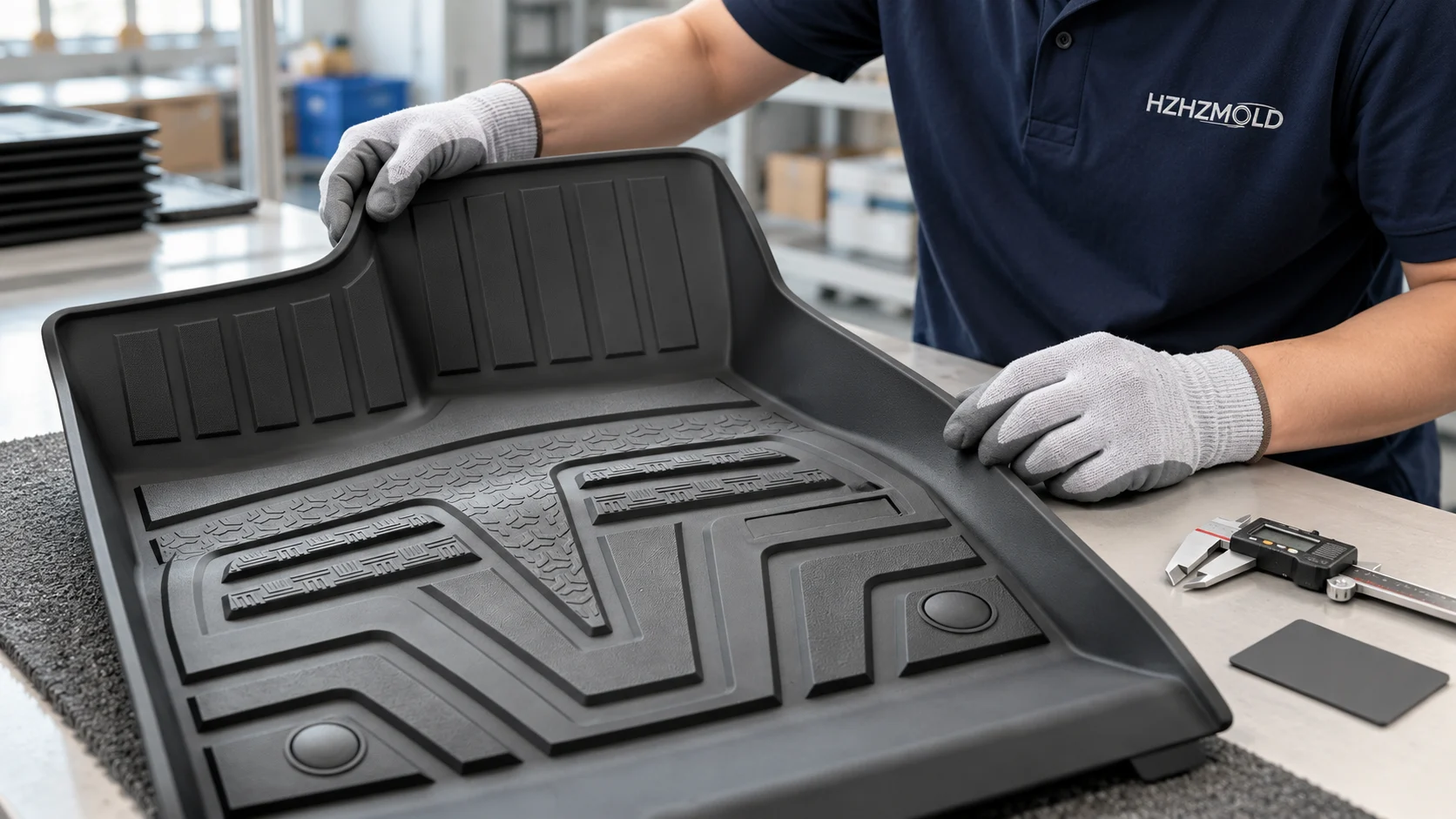
A photo can show color and texture, but it cannot settle every question about a floor mat. A physical sample lets your team review the product against the vehicle, your target customer and the agreed specification.
Use the same checklist for each sample so that feedback is specific and easy to act on.
Check the shape in the vehicle
Place each mat in its intended position without forcing an edge into place. Look at coverage around the footrest, center tunnel and seat tracks. Confirm that doors close normally, seats move through their normal range and the driver-side mat stays clear of the pedals.
Inspect how the mat meets the vehicle's retention points. If the design uses clips or other fixings, confirm the correct parts and their placement with the supplier.
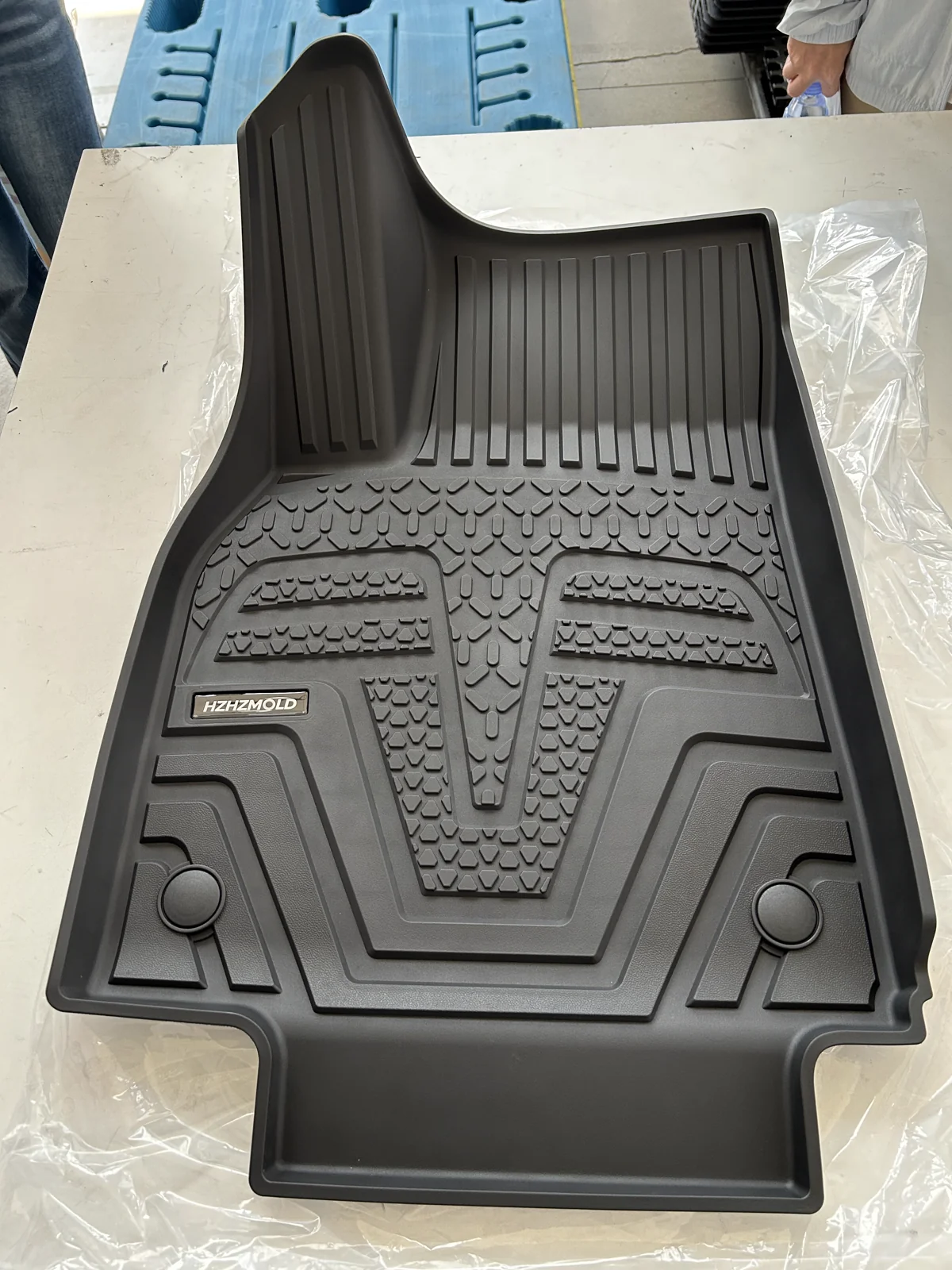
Review the molded details
Look for consistent surface texture, neat edges and an even shape when the mat rests flat. Test how easily everyday debris can be removed from grooves and raised areas. Note anything that might affect how the end customer handles or cleans the product.
For a multi-piece set, check that the labels and included pieces match your specification. Photograph the sample from the same angles each time so differences between revisions are clear.
Close the documentation loop
Before approval, request the material and test documents relevant to your market and buying requirements. Record the approved color, finish, logo position, packing method and vehicle fitment alongside the sample identifier.
If a revision is required, state the change, who will verify it and whether another physical sample is needed. A written approval record gives both sides a clearer production reference.